Water absorption, oil absorption and absorption speed: how to read an absorption value
“Very absorbent” is not a measurement. Water absorption capacity, absorption speed and oil absorption are separate questions and are measured separately. We explain what should accompany an absorption value and how to describe your own use.
- Published
- By
- VOA editör ekibi
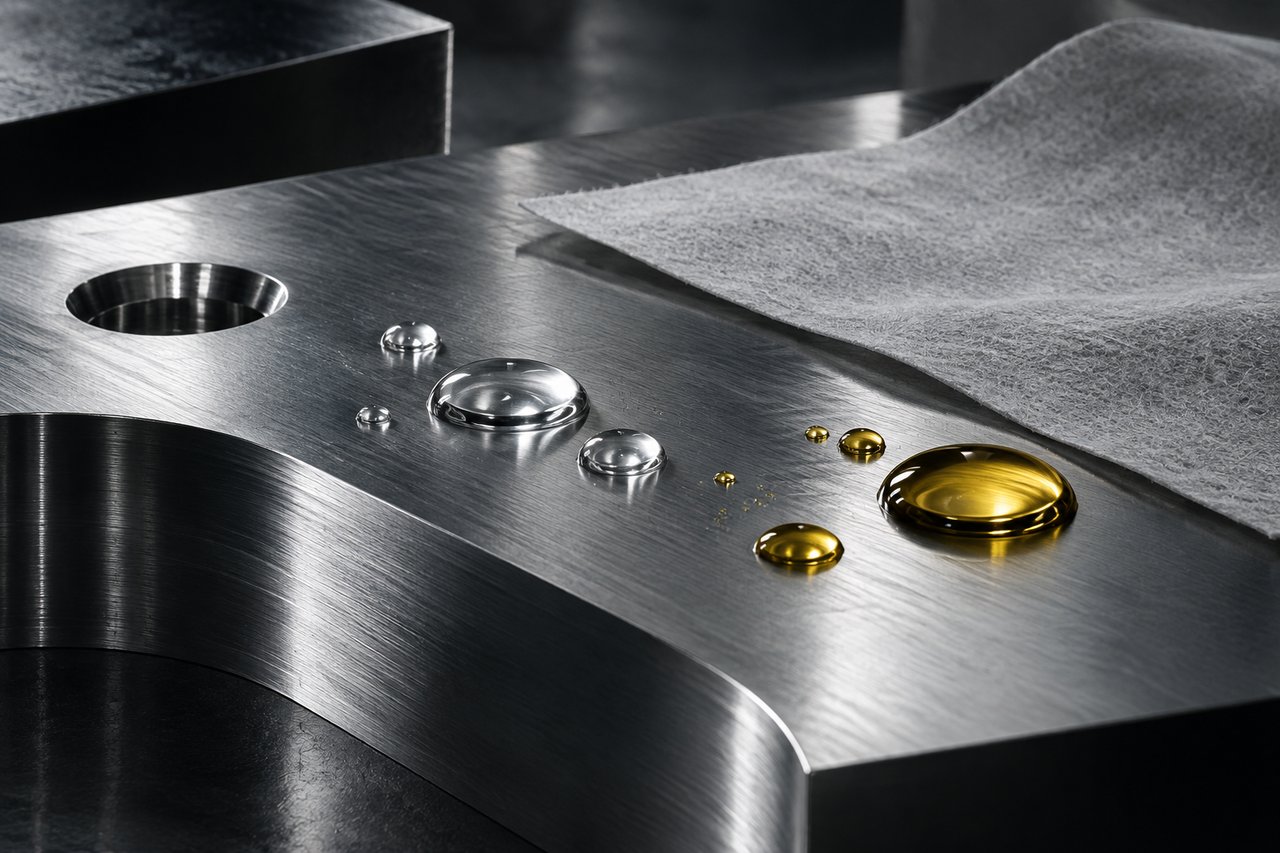
One of the phrases heard most often when choosing a wiping and drying textile is “very absorbent”. It describes an impression, not a measurement. If it is not clear which liquid is absorbed, how much, how quickly and under what conditions, it becomes hard to compare two products or to judge whether a product will do your job.
This guide covers the questions to ask when you read an absorption value. The aim is not to promote a product but to tell what a value says and what it does not.
Three separate questions: capacity, speed and oil
Absorption is not a single property. VOA's test framework separates at least three questions:
Water absorption capacity: how much liquid a given area of fabric can hold. It is usually expressed as volume per unit area, for example litres or millilitres per square metre.
Absorption speed: how quickly the liquid is taken up. For controlling a spill this matters as much as capacity. The result is read together with the time in seconds and the type of liquid.
Oil absorption: how much oil is picked up and how much is then released back onto the surface. It is usually expressed as weight of oil per weight of fabric (g/g), together with re-release information.
A high capacity on one product does not mean it absorbs quickly or picks up oil well. Each question is measured with its own method.
Why water and oil are not the same
Water and oil are different liquids; they flow differently and interact with fibres differently. A result measured with water therefore cannot be used for oil, and a result given for oil cannot be carried over to water. In kitchens and industry both can be on the same surface, and then you need two separate pieces of information.
The same logic applies to chemical liquids. When you work with a chemical, the real question is compatibility rather than absorption: how does the cloth keep doing its job with that chemical, at that concentration and contact time? That is a separate verification carried out chemical by chemical.
What should accompany a value
An absorption value that arrives as a bare number is incomplete. A reliable value comes with:
Product identity: which product or SKU the value belongs to.
Sample: the composition, grammage, colour and finish of the fabric tested.
Method: the standard or validated protocol used, the test conditions and the unit of measurement.
Liquid type: water, oil or another liquid?
Result: a numerical value, a class or a pass/fail outcome.
Document: the report number, the organisation that issued it and the date.
Limit: which products the value does not cover.
If any of these fields is missing, be careful when interpreting the value for your own use. A value measured in one product family does not automatically carry over to another size, colour or construction in the same family.
Watch out for absolute statements
Statements such as “absorbs all grease and dirt” are absolute, while capacity and soil type vary. The correct way is to give the value with its soil type and unit. In the same way, “dries quickly” cannot be compared without knowing the temperature, relative humidity and time. VOA's principle is to share such results only together with the product and conditions in which they were measured.
Describe your own use
The fastest way to the right product is to make your own task measurable. When you prepare an inquiry, write down:
Which liquids are involved: water, oil, food residue, a chemical liquid?
Which surface you work on: stainless steel, glass, stone, ceramic, polymer, machine parts?
What the task is: wiping, drying, spill control, picking up oil during maintenance?
Roughly how much liquid you deal with in one use, and how often the cloth is changed.
If you use chemicals: their name, concentration and contact time.
For spills of hazardous substances, your facility's safety procedure applies; a wiping textile does not replace that procedure.
How VOA shares absorption information
At VOA, absorption, drying and oil results are handled per product. A value is shared on a product page or in a document pack only once it is matched to the relevant product, method and report. For information whose matching is not yet complete, the right place is the sample and quotation discussion, where it is confirmed per product which result exists for which product. Examining a sample under your own conditions is also useful; just keep in mind that this observation does not replace a laboratory test result.
To work out your use case with us, you can share your surface, liquid and task details on the inquiry page.
- Category
- Insights
- Tags
- Evidence and documents
- Reading measurements