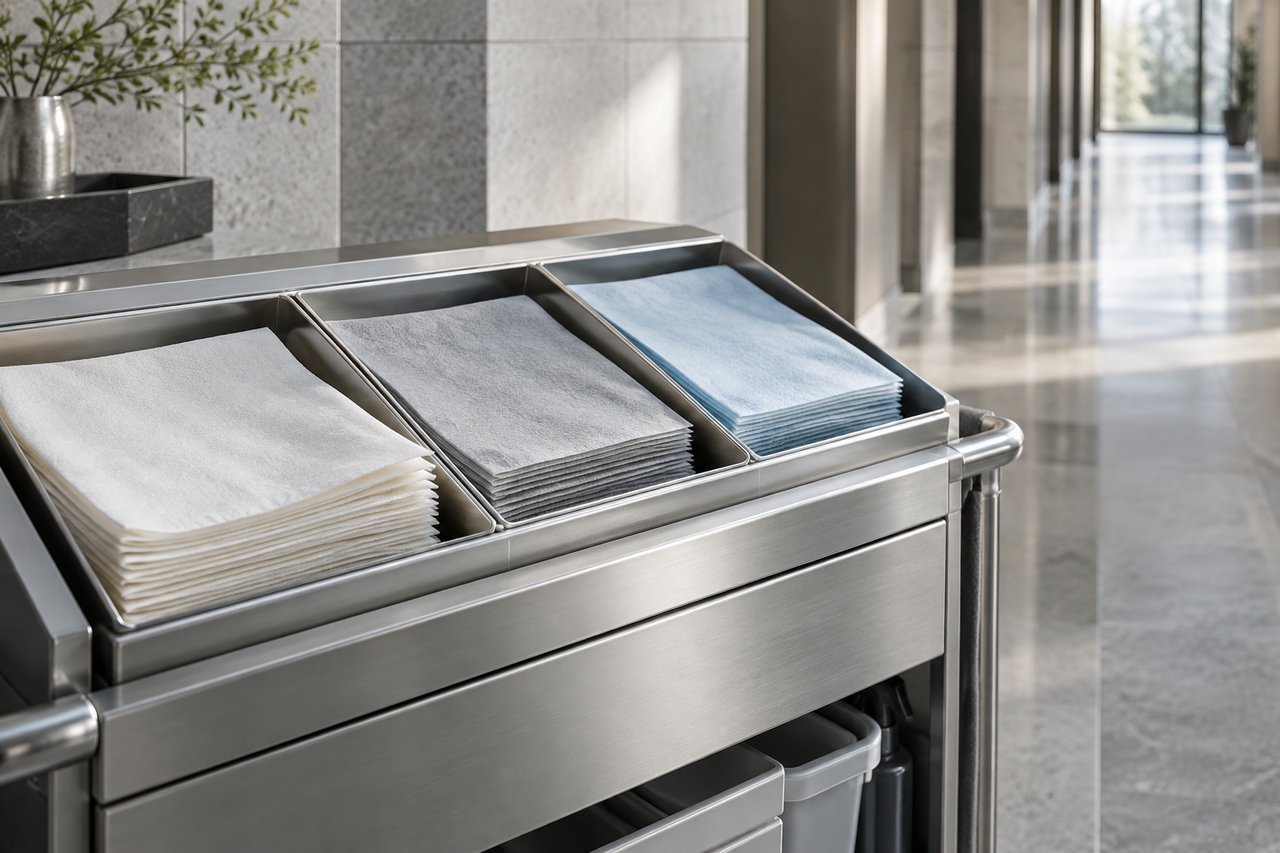
Is colour coding enough in a professional kitchen?
Coloured cloths help separate stations, but hygiene is set by the procedure defined alongside the colour, not by the colour itself. We look at what colour coding does and does not do, which rules belong next to it, and how to start a station plan with VOA.
- Published
- By
- VOA editör ekibi
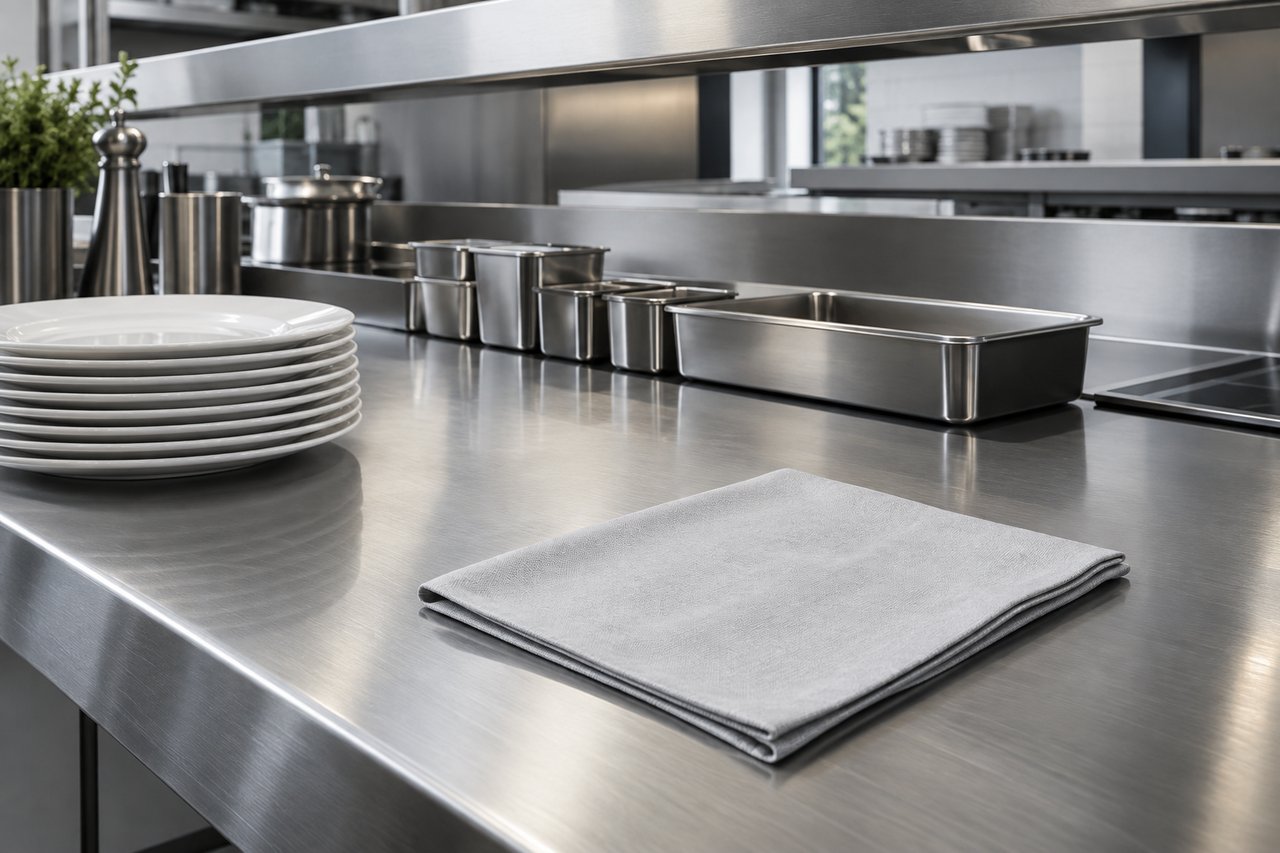
In a professional kitchen, cloths of different colours kept in separate boxes look orderly. The team can see at a glance which cloth belongs to which counter. Still, a common question is a fair one: is colour coding enough on its own?
The short answer is no. Colour is a visual cue that reminds people of a rule; it is not the rule itself. This article looks at what colour coding does in a kitchen, what it cannot do, and what needs to be defined alongside it.
The problem: the colour is visible, the procedure is not
Once a colour system is in place, the cloths are the easiest part to see. What stays invisible is when a cloth is changed, how it is washed, where it is dried and how clean and soiled cloths are kept apart. If these steps are not written down, a cloth of the right colour can travel to other areas during a shift or return to the wrong shelf after washing. The colour can be right while the practice is wrong.
What colour coding does and does not do
A well-designed colour code speeds up zone separation, makes it easier for new team members to learn, and lets an inspection see which cloth belongs to which area.
What colour coding cannot do is just as clear:
It does not clean or disinfect a surface on its own.
It does not prevent cross-contamination on its own; that is managed by a facility procedure covering zone separation, change frequency, clean and soiled storage, and training.
It is not a universal legal code. Which colour belongs to which area can differ from one facility to the next.
It does not show that a product is suitable for food contact.
VOA's approach states this rule plainly: a colour code does not provide hygiene by itself. The area of use, change frequency, washing and disinfection method, drying and storage procedure are defined together.
What to define alongside the colour
Before adding colours to a station plan, we suggest writing down the answers to these questions:
Zone: How are areas such as preparation, the cooking line, service, the bar and equipment cleaning separated? How does the facility's own hygiene plan define the role of each zone (for example high-risk area, general surface, food preparation or auxiliary area)?
Change frequency: When, and how often, is a cloth changed? Is it decided by shift, by task or by soiling?
Washing and disinfection: How are cloths washed, and which chemical is used, at what concentration and contact time?
Drying and storage: Where and how are clean and soiled cloths kept apart?
Training: Where does a new team member learn the rule, and where is it posted?
In this list, colour is only one line. The real work is how the facility's own HACCP and hygiene plan fills in the other lines.
Cleaning, disinfection and food contact are separate questions
Three ideas are often mixed up with kitchen textiles. Cleaning means removing soil and residue from a surface. Disinfection means applying a chemical product at a defined concentration and contact time; the cloth only carries it and is not a disinfectant by itself. How a cloth and a chemical work together is a separate matter that has to be verified. Food contact is about whether the cloth is intended to touch food directly; if so, material components, migration and the relevant regulations are assessed separately for each product.
Keeping these three questions apart makes it clear what is being asked, and what is being answered, on a product page or in a quotation discussion.
HACCP and certification language
HACCP is a business's own food safety plan. A cloth can be one of the tools used to put that plan into practice, but a wipe product is not described as “HACCP certified”. Keep the same distinction in mind when you ask a supplier for documents: a test report for a product does not replace the business's plan.
Colour retention is also a measurement
A colour code relies on the colour staying recognisable throughout use. How a colour behaves under washing, rubbing and chemical contact is measured by colour fastness tests (for example the ISO 105 series). Read such results per product, per colour and per care programme; the result for one colour does not automatically carry over to another colour or another product.
How to start with VOA
When you prepare an inquiry for a station plan, sharing the following speeds up the conversation:
Your list of stations and the surfaces at each one: stainless steel, stone, ceramic, polymer or equipment.
The type of soil at each station: water and moisture, grease, food residue or particles.
The cleaning and disinfection chemicals you use and your current washing routine.
Your existing colour and zone plan, if you have one.
Whether any use is intended to involve direct contact with food.
With this information we can discuss suitable product families, colour and size options, and a sample step for your stations. Colour, size and packaging options and the scope of documentation are confirmed per product at the sample and quotation stage.
If you would like to work out your own station plan with us, you can prepare your needs step by step on the inquiry page.
- Category
- Insights
- Tags
- Care and use
- Colour coding